
If you’ve spent any time lately scrolling through kitchen remodels on Instagram, you’ve probably noticed something: metal countertops are having a serious moment. For years, it felt like granite and marble were the only options, but today, more homeowners (and designers) are looking past the usual suspects and embracing metal for its style, practicality, and surprising warmth.
So, what’s it actually like living with metal counters? Are they just for restaurant kitchens and modern lofts, or could they be the missing piece in your own home? I’ve helped a lot of friends and clients navigate this choice, and after seeing metal countertops in action (and, yes, cleaning a few too many sticky spills off them), here’s what you really need to know.
Why Metal? The Real-World Benefits
Let’s start with the basics: metal countertops are tough. We’re talking about surfaces that shrug off spilled coffee, dropped pans, and the occasional forgotten hot pot. Unlike wood, they don’t warp. Unlike stone, they’re non-porous, so you don’t have to worry about sealing or stains. And if you’re the kind of cook who actually uses your kitchen, that’s a huge relief.
But what really sold me (and a lot of my clients) is the look. Metal can be sleek and modern, like something from a professional chef’s dream kitchen, or it can be warm and lived-in, with a patina that tells the story of every family meal. There’s a metal for every style—and they’re a lot more flexible than most people think.
Many Faces of Metal Countertops
Not all metal counters are created equal. Here’s a quick tour of the main options, with real-life pros and cons.
Stainless Steel
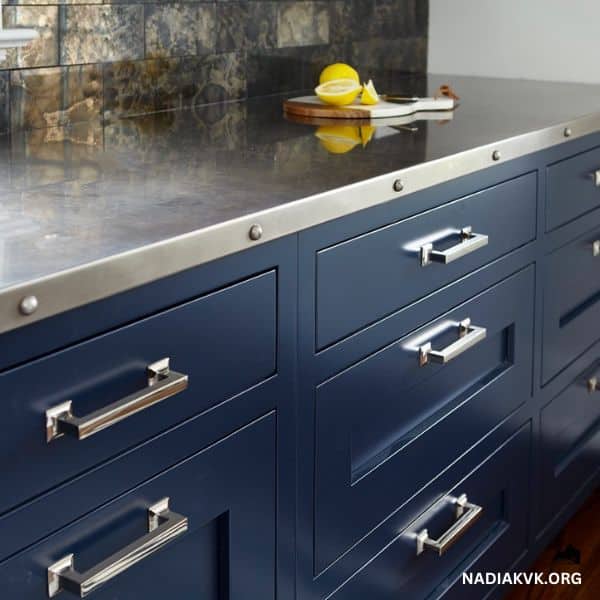
This is the classic: think professional kitchens, but also that cool Brooklyn brownstone with subway tile and open shelves. Stainless steel is made from a blend of iron, chromium, and nickel—translation: it doesn’t rust, and it won’t stain.
Why you’ll love it:
- Totally non-porous (no sealing, ever)
- Laughs at heat and spills—put down a hot tray, no problem
- Super easy to clean; a damp cloth is all you need
- Works with any color scheme and looks great with appliances
Things to consider:
- Shows fingerprints and water spots (but a quick buff with a microfiber cloth fixes that)
- Can dent if you drop something heavy
- Some people find it a bit “cold” visually, but pairing with wood or warm lighting balances that out
Read More: Slate Countertops
Copper
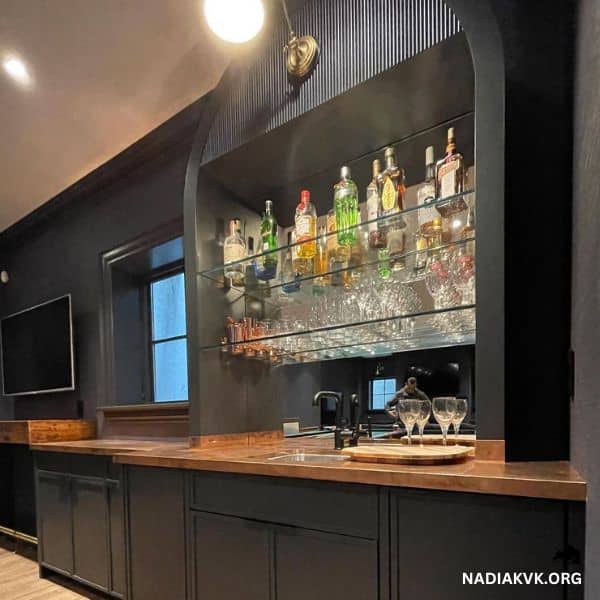
Copper is the wild card—every piece is unique, and it actually changes over time. That bright, shiny penny look? It’ll mellow into deeper browns and soft greens as it patinas, giving your countertop a lived-in, heritage vibe.
Why you’ll love it:
Warm, inviting, and perfect for rustic or farmhouse kitchens
Naturally antimicrobial (yes, it literally kills germs on contact)
Develops personality as it ages—scratches and dings blend right in
Things to consider:
- Softer than steel, so it can scratch or dent (I say embrace the patina!)
- Needs some care if you want to keep it shiny—otherwise, let it age naturally
- More expensive and sometimes hard to find
Brass
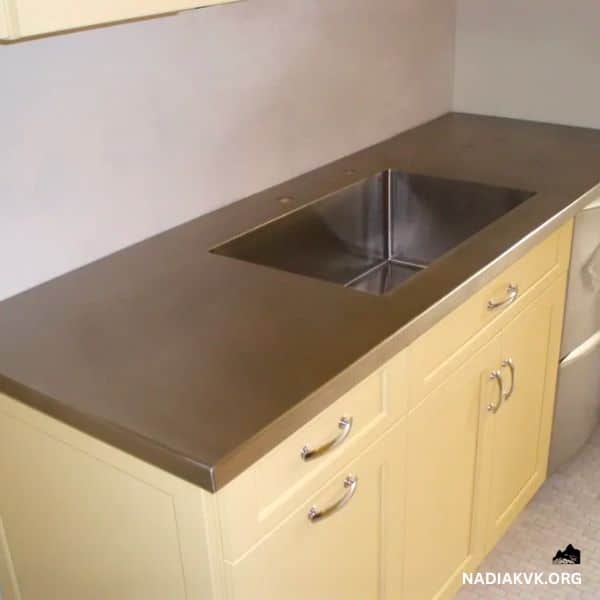
Want your kitchen to feel like a Parisian café or a hip cocktail bar? Brass is for you. It gleams when polished but also ages beautifully if you let it. Brass is showing up more in islands, bars, and even full countertops for those who want a bold statement.
Why you’ll love it:
- Absolutely gorgeous—pairs beautifully with deep blues, greens, or rich wood
- Can be polished for mirror shine or left to develop a soft, antique patina
- Durable if you don’t mind a few marks
Things to consider:
- Expensive and less common; usually needs to be custom-ordered
- Like copper, it will develop a patina (which many people love)
Read More: Blue Dunes Granite
Bronze
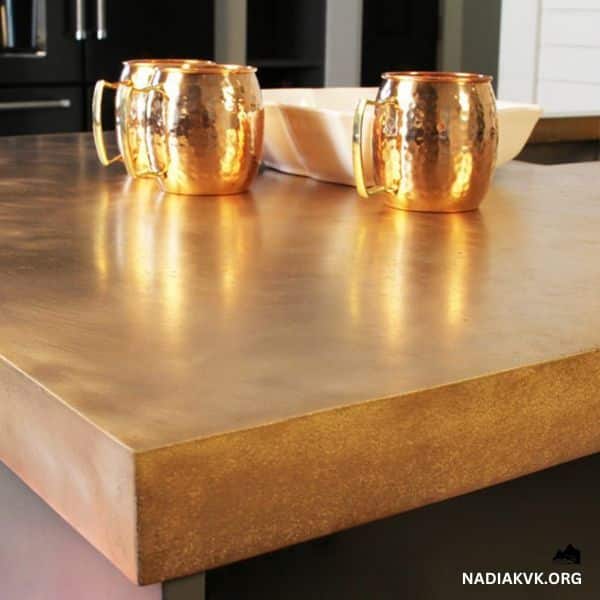
Bronze isn’t just for sculptures—it makes a striking countertop, too. Its deep, rich tone adds warmth and drama, especially in kitchens with lots of natural light.
Why you’ll love it:
- Strong and heat-resistant
- Unique, sophisticated look
- Stands up to everyday use
Things to consider:
- Pricey and not as widely available as stainless or copper
- Will change color over time unless sealed
Read More: Ubatuba Granite
Zinc
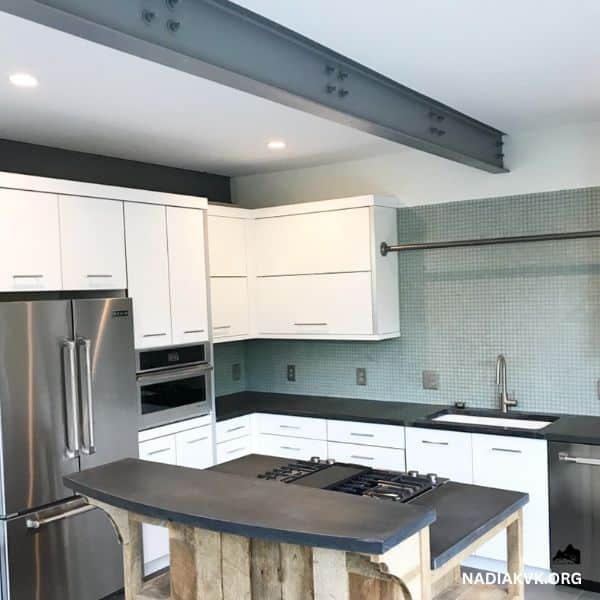
Zinc is the unsung hero of the metal world—a soft, matte blue-gray surface that feels inviting, not industrial. It’s a staple in French bistros and can soften up a modern space.
Why you’ll love it:
- Eco-friendly and naturally bacteria-resistant
- Develops a subtle patina with age
- Soft to the touch—less “clanky” than steel
Things to consider:
- Softer metal, so it scratches, but those marks blend into its evolving look
- Can be expensive, especially for custom work
Read More: Nano Stone Countertops
Pewter
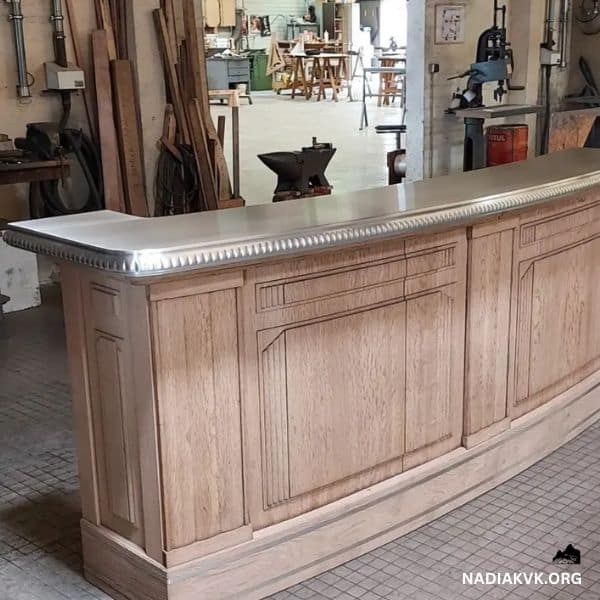
Pewter is rare but beautiful, with a silvery, almost velvet finish that’s hard to describe until you see it in person. It’s a softer metal, so best for low-traffic areas or accent counters.
Why you’ll love it:
- Doesn’t show fingerprints or smudges as much as stainless
- Unique look—your neighbors won’t have this!
- Easy to clean
Things to consider:
- Softer than most metals (scratches and dings are part of the charm)
- More expensive and special order only in most areas
Style & Installation: What to Expect
Metal countertops are almost always fabricated to fit your exact space. You can choose the thickness, edge style, and whether you want integrated sinks or backsplashes. Many installers use a wood base with sheet metal wrapped over it, which gives the counter substance and helps with sound (no “tinny” echo when you set down a pot).
Pairing metal with other materials—say, walnut cabinets or a butcher block island—can warm up the look and keep your kitchen from feeling too stark. Lighting also makes a huge difference: cool LEDs amp up the modern vibe, while warmer lights bring out the metal’s rich tones.
Read More: Baltic Brown Granite
Cost: Are Metal Countertops Expensive?
Short answer: they can be! Stainless steel is usually comparable to high-end granite or quartz, especially if you want premium features like welded corners or integrated sinks. Copper, brass, and pewter are pricier—sometimes double the cost of stainless—due to the price of the raw material and the need for custom fabrication.
But here’s the thing: you’re getting a countertop that can last decades, never needs sealing, and gets better with age. For a lot of people, that’s worth the investment.
Living with Metal Counters: Maintenance & Care
The good news? Metal countertops are refreshingly easy to live with. Here’s my go-to routine:
- Wipe up spills: Use a soft, damp cloth—no need for fancy cleaners (in fact, avoid anything acidic or abrasive).
- Polish occasionally: Stainless steel likes a little vinegar or specialized polish. Brass and copper can be polished to restore shine, or left to develop patina.
- Buff out light scratches: Most small marks will blend in over time, especially with softer metals.
- Dry after cleaning: Especially for zinc and steel, to avoid water spots.
- Avoid cutting directly on the surface: Use a cutting board to protect your knives and the counter.
If you love the “lived-in” look, you’ll appreciate how metal counters age. If you want them to stay flawless, go for a brushed finish and be prepared for a little more upkeep.
Read More: Valle Nevado Granite Countertops
Sheet Metal Countertops: A Budget-Friendly Option?
Yes, you can use sheet metal for a countertop, usually wrapped over plywood for strength. It’s much cheaper than thick, custom-fabricated slabs and works great for utility spaces, modern lofts, or secondary kitchens. Just remember: thinner metal can dent if you’re rough with it, and it’ll feel colder to the touch (not a deal-breaker, but something to note).
The Bottom Line: Should You Choose Metal for Your Kitchen or Bar?
Metal countertops aren’t for everyone—but if you want a surface that stands out, handles real kitchen messes, and ages with character, they’re more than just a trend. They’re also ideal for anyone tired of worrying about stains or scratches on natural stone. If you cook a lot, love modern or industrial design, or just want something different, metal might be the wildcard choice that pays off big.
If you’re on the fence, visit a kitchen showroom and run your hand across a few metal counters. See how they catch the light, how they feel when you tap your fingers on them, and imagine them in your space. You might be surprised at how inviting and practical it really are.