
Kitchen counters are the unsung heroes of our homes. They do everything from making meals and hosting family gatherings to doing homework and taking coffee breaks. It’s important to keep them looking good for as long as possible because they get so much use. The good news is that if you take care of your countertops properly, they will stay beautiful, useful, and even raise the value of your home for years to come. This guide will show you the best ways to care for all kinds of kitchen countertop maintenance so that they last as long as possible.
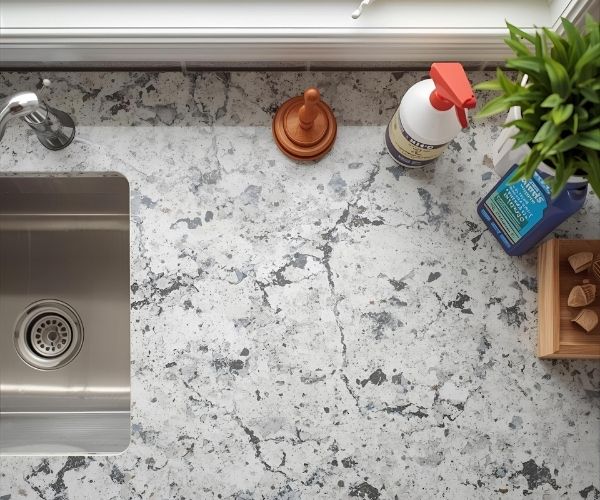
Knowing what your countertop is made of
Before you start cleaning and taking care of your countertop, you should know what it’s made of. There are different ways to take care of each type, such as granite, quartz, marble, laminate, butcher block, concrete, stainless steel, and more. If you use the wrong cleaning products or methods, you could actually make things worse. So always start with the basics:
- Find out what your countertop is made of. If you’re not sure, ask your installer or look at the paperwork you got when you bought it.
- Follow the care instructions from the manufacturer. These often have specific tips and warnings.
Cleaning every day: Keeping the counters clean
Cleaning your countertops every day, is the first step to keeping them looking good. Here are some tips, for keeping different materials looking new every day:
Granite
- With a soft cloth or sponge, and warm water and a few drops of mild dish soap, clean it.
- Don’t use strong or acidic cleaners like vinegar or lemon juice because they can wear down the sealant, and make the finish look dull.
- Clean up spills right away, especially those that are acidic (like wine, citrus, or tomato sauce) or oily.
- To keep water spots from forming, dry completely with a clean towel.
Quartz (Engineered Stone)
Use a soft cloth, warm water, and mild soap to clean.
Quartz doesn’t have any holes, so it doesn’t get stained easily. However, you should stay away from rough pads that could dull the surface.
Don’t use strong chemicals or solvents.
Marble
- Marble is pretty, but it is more sensitive to scratches and acids.
- Use a cleaner that doesn’t change the pH or mild soap and water.
- Do not use vinegar, lemon, or rough scrubbing pads.
- Quickly blot up spills to keep them from staining, especially wine, coffee, and oils.
Laminate
- Use a damp cloth and mild dish soap to clean.
- Don’t use pads or powders that are rough, as they can scratch the surface.
- Use a baking soda paste on stubborn spots, but don’t leave it on for too long.
Butcher Block (Wood)
- Wipe down with a damp cloth and some mild soap.
- To keep water from damaging it, dry it right away.
- Use a mix of water and vinegar to clean, but don’t let the surface stay wet.
- Don’t soak wood countertops, and don’t use strong chemicals.
Concrete
- Use a solution of soap and water that isn’t too strong.
- Concrete can soak up liquids, so clean up spills right away, especially if they are acidic or oily.
- Stay away from strong chemicals, which can remove sealants.
Steel that doesn’t rust
- Use a cloth that has been dampened with soapy water to wipe.
- Use a microfiber towel to dry off to avoid water spots.
- Use olive oil or a cleaner for stainless steel to make it shine even more.
- Do not use abrasive pads, and always wipe in the direction of the grain.
Care Routines for Every Week and Month
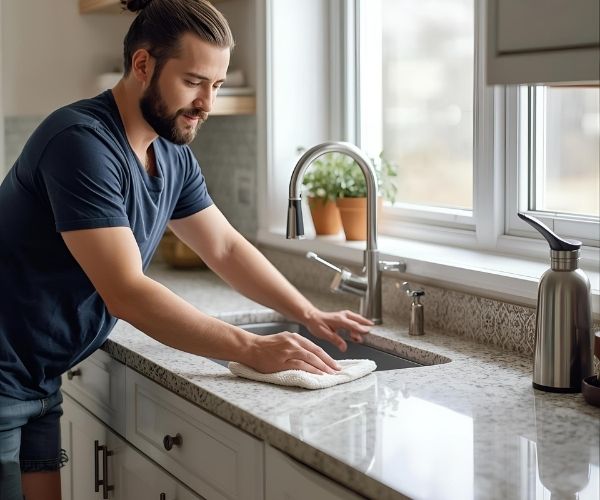
Your countertops will also benefit from regular deep cleaning and maintenance, in addition to daily cleaning:
Sealing Natural Stone
If not sealed properly, granite, marble, soapstone, and concrete countertops can soak up stains. Protection requires resealing:
- Put a few drops of water on the surface to see if your sealant works. Your sealant is still working if it beads up. It’s time to reseal if it soaks in after a few minutes.
- Most granite and marble countertops need to be resealed every one to two years, but some high-quality sealants last longer.
- For the best resealing products and how often to use them, follow the instructions from the manufacturer or installer.
Oiling Butcher Block
To keep butcher block wood countertops from cracking and splitting, they need to be oiled regularly:
- Use mineral oil that is safe for food or a conditioner that the manufacturer suggests.
- Put on a lot, let it soak in, and then wipe off the extra.
- Oil new countertops or those that have been heavily used once a week. As the wood becomes more saturated, cut back to once a month.
Polishing
- You can use a stone-safe polish to bring back the shine on stone countertops (always follow the directions on the product).
- You can get rid of streaks on stainless steel by buffing it with a microfiber cloth and a little olive oil.
- Don’t wax or polish laminate countertops because this can make them sticky.
How to Get Rid of Stains When Accidents Happen
Stains and marks will happen no matter how careful you are. The most important thing is to deal with them right away and use the right method for the type of countertop you have.
Granite and Stone from Nature
- For oil-based stains, mix baking soda and water to make a paste, put it on the stain, cover it with plastic wrap, and let it sit overnight before wiping it away.
- If you have organic stains like coffee or wine, try a mix of hydrogen peroxide and a few drops of ammonia. Just make sure to test it in a hidden spot first.
Quartz
- A gentle cleaner can get rid of most stains.
- For sticky messes like paint or gum, gently scrape with a plastic putty knife and then clean as usual.
- Don’t use strong solvents like paint removers.
Marble
- Blot spills right away; don’t rub them.
- Make a paste with baking soda and water for tough stains, put it on the stain, and cover it for 24 hours before gently taking it off.
- Don’t use cleaners that are acidic or rough.
Laminate
- If you want to get rid of ink or marker, try rubbing alcohol on a cloth (but test it in a place that won’t be seen first).
- If you have tough stains, make a paste of baking soda and water, but don’t scrub.
Butcher Block (Wood)
- Use coarse salt and a lemon cut in half to scrub stains.
- For stains that are really deep, lightly sand them with fine-grit sandpaper and then re-oil.
Concrete
- You can use a baking soda and water poultice to get rid of grease or oil stains.
- Stay away from products that are acidic or have bleach in them.
Stainless Steel
- Make a paste of baking soda and water to get rid of stains.
- Use glass cleaner or a mix of vinegar and water to clean fingerprints.
How to Avoid Common Mistakes on Your Countertop
Cleaning is just as important as stopping things from happening. These are some things you can do to make your countertops last longer and look better:
1. Always use cutting boards
Direct cutting can leave scratches, dull knives, and even permanent marks, no matter what the material is. When preparing food, always use a cutting board.
2. Use hot pads and trivets
Heat can cause burns, cracks, or discoloration, especially on laminate, quartz, and wood. Putting hot pots and pans on trivets or pads instead of directly on the countertop will protect your surfaces.
3. Clean Up Messes Quickly
Many types of countertops can be stained or etched by acidic liquids (like wine, coffee, vinegar, and citrus juice) and oils. The best way to protect yourself is to clean quickly.
4. Stay away from strong chemicals
A lot of common cleaning products, like bleach, ammonia, and acidic cleaners, can hurt the finish on countertops. Use only the products that the manufacturer says are safe or that are gentle and pH-neutral.
5. Don’t Stand or Sit on the Countertops
Heavy weight can cause cracks, chips, or even breaks, especially along seams and edges.
How to Take Care of Mixed Countertops
A lot of modern kitchens have more than one type of countertop, like a marble island, a quartz perimeter, and a butcher block breakfast bar. If this is the case, keep in mind that each area may need different care:
- To avoid cross-contamination, keep cleaning supplies for different surfaces separate.
- Teach your family which parts are more fragile. Labeling can help in busy homes.
Fixing Small Damage
Even if you do everything right, chips, scratches, and dull spots may still happen over time. Here’s how to deal with them:
- A professional can sometimes fill in small chips in granite and quartz with epoxy that matches the color.
- You can often sand out scratches on wood and then oil it again.
- You might need to go to the hardware store to get a repair paste for laminate chips.
- Professionals can polish marble that has dull spots from acids.
- If your stainless steel has dents or deep scratches, you may need to hire a professional to buff it.
If you’re not sure or the damage is bad, call a professional to fix your countertop.
Seasonal and Deep Cleaning
At least twice a year, check your countertops carefully and clean them well:
- Look for cracks, chips, and seams that aren’t tight. Fix any problems right away to stop more damage.
- Take everything off the counters. Make sure to clean every inch, even the corners that are hard to get to.
- Reseal and re-oil as needed, depending on what your material needs.
- If your countertop type allows it, polish it.
Now is also a great time to clean out and reorganize your kitchen!