
Let’s be honest: granite countertops are beautiful, but they don’t come with a guide. You might have just moved into a place with a brand new slab, or you might have had your granite for years and want to keep it looking good. You may have asked yourself, “How often am I supposed to seal granite countertops?” at some point.
It’s a good question, and there isn’t one answer that fits all. But don’t be alarmed! I’ve worked with stone surfaces for years and talked to homeowners, so I can tell you everything you need to know. You’ll know exactly what your countertop needs (and what it doesn’t) by the end of this guide.
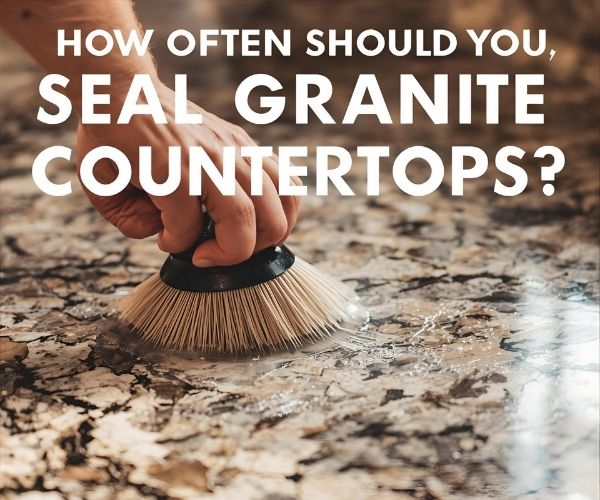
Why Sealing Granite Is Important
If you’ve ever spilled a glass of red wine or olive oil and seen it bead up on your counter, you can thank your sealant and the person who put it on. Granite is a natural stone, so it has small holes in it. These pores can soak up liquids, which can lead to stains, smells, and even bacteria if you’re not careful.
Not all granite is the same, though. Some types are denser and naturally less likely to stain, while lighter colours or more unusual patterns can soak up a lot of water. Sealing is what keeps those accidents from becoming permanent reminders, no matter what.
How often should you seal granite countertops?
Let’s get to the point:
Most people should seal their countertops once a year.
But here’s the thing: it’s not a hard and fast rule. Your granite may need to be sealed more or less often. Why? It depends on a few things:
- Colour and Type: Granites that are lighter in colour and type are usually more porous.
- How Often You Use Your Kitchen: The sealant wears out faster if you cook, chop, and wipe all the time.
- What You Use to Clean: Acidic and harsh cleaners can break down the sealant.
- Quality of the Last Seal: Some professional sealers last 2–3 years, but if you do it yourself, you might need to touch it up sooner.
If you don’t remember anything else, remember this: If you’re not sure, try it out!
The Water Trick: The Easiest Granite Test
You don’t need a lab coat or any cool gadgets. This is what you should do:
- Wipe down a small part of your countertop. Let it dry.
- Add a small amount of water (about a tablespoon) to the top.
- Wait for 10 to 15 minutes.
Did the water form beads on top? Good—your seal is strong.
Did the water soak into the granite and make it look darker? It’s time to seal again!
Do this test in a few different places, especially near the sink or stove, where spills happen the most.
See More: Choose Kitchen Countertop Material
How to Seal Granite Countertops Without Hiring a Professional
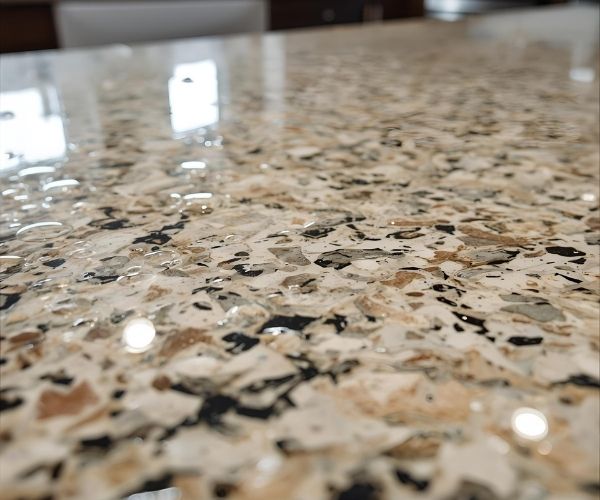
It’s not hard to seal granite. You will need the following:
- Get a granite sealer from the hardware store; they usually come in spray bottles.
- Two clean towels or cloths that don’t leave lint
- Water and dish soap
Step by Step:
- Wipe down the countertop: Get rid of any spills, grease, and crumbs that are still there. Let it dry all the way.
- Put on the sealer: Spray or pour a thin, even coat. Don’t go overboard; more isn’t always better.
- Let It Soak: Let the sealer work for 10 to 20 minutes. Add a little more if some parts seem to be drying faster.
- Get Rid of Extra: Don’t let it sit on top for hours; wipe off anything that doesn’t soak in.
- Buff for a Shine: Quickly buff your dry cloth. It shouldn’t be sticky; it should feel smooth.
If you can, don’t touch the counter for a day. In this way, the sealer has time to dry completely.
Signs Your Granite Needs Sealing (or Help!)
You might not be sure if your granite needs help. Look for these signs:
- Water doesn’t bead up anymore; it just soaks in.
- You see dark spots or stains that weren’t there before.
- The surface isn’t glossy and smooth; it’s rougher or duller.
If you see these, it’s time to seal them. If the stains are really deep, you might want to call a stone expert.
Everyday Tips for Keeping Granite Looking Great
Sealing is only the first step. These quick habits will help you keep your granite looking great year after year:
- Quickly clean up spills: Especially coffee, wine, oil, or anything else that is acidic.
- Don’t use vinegar: You don’t need harsh cleaners; just use mild dish soap and water.
- Use cutting boards: Granite is strong, but knives can leave marks and dull your knives.
- Hot pads: Granite can handle heat, but it doesn’t like it when the temperature changes quickly.
See More: Common Kitchen Countertop Mistakes
What is better for you: sealing yourself or hiring a pro?
Most homeowners can really do the sealing themselves. But if
- You have a new countertop and want to start with a professional job.
- The granite is stained or etched and needs to be fixed.
- Or you just don’t want to deal with the mess.
It might be a good idea to call in a pro. They sell products that are good enough for businesses, and they can sometimes make old granite look new again.
Granite Sealing: Myths and Facts
Let’s clear up some misconceptions:
Myth: “You have to seal every granite counter every year.”
Truth: If your granite is very dense, it might not have any problems for two to three years.
Myth: “Sealing makes granite stain-proof”.
Truth: It helps, but you still need to clean up spills right away.
Myth: “Any cleaner will work if you seal it.”
Truth: Acidic or rough things can still break down the sealant.
What Happens If You Don’t Seal Your Granite?
You might not see a disaster right away if you don’t seal. But after a while, you will probably see:
- Dark spots, especially those caused by wine or oil
- Losing its shine
- Etching (a surface that is dull and rough)
Without professional help, these problems can be hard or even impossible to fix. So, for most people, it’s worth it to spend 30 minutes a year!
Questions and Answers
Q: Is it possible to seal granite too much?
A: Yes! Over-sealing can leave a film that looks cloudy. Seal only when your granite really needs it.
Q: Is there such a thing as “maintenance-free” granite?
A: Some engineered stones or very dark, very dense granites are close. But all natural stone needs some care.
Q: Does sealing change the colour or shine?
A: No, as long as you follow the directions. Some sealers can make colours a little darker, but most of them are not visible once they are dry.