
If you go into any kitchen, you’re likely to find at least one piece of cast iron cookware hidden away. It could be a skillet that your grandparents gave you, or it could be a new pan that you bought because everyone says how useful and long-lasting they are. Cast iron is popular for a good reason: it heats evenly, stays hot for a long time, and can last for many generations if you take care of it. But even the best skillet can get a sticky surface at some point, which can be very annoying. You might wonder, “Can you cook with sticky cast iron?” Is it safe? And, more importantly, how do you get it back to its original, smooth state?
Let’s talk about what makes cast iron sticky, how to fix it and how to keep your skillet in great shape for years of tasty meals.
What Does “Sticky Cast Iron” Really Mean?
You know the feeling if you’ve ever run your hand over a well-seasoned cast iron pan: it’s smooth, almost glassy, and food slides off with little effort. Sticky cast iron is just what it sounds like.
The surface feels sticky, and food sticks to it instead of easily lifting off. It can be hard to cook on because eggs stick to the pan, pancakes tear instead of flipping, and cleaning up takes twice as long. But why does this happen? And is it something to worry about?
Read More: Gran Perla Granite
Why does cast iron get sticky? Common Causes
Here are some reasons why your favourite cast iron skillet might lose its non-stick magic and become sticky:
Seasoning Your Cast Iron
Can I Cook with Sticky Cast Iron
Wrong Seasoning
The “seasoning” on cast iron is a layer of oil that has been polymerised and baked onto the surface. It keeps your pan from rusting and makes it non-stick. If that layer is too thick or not fully baked in, it might not harden and instead become sticky. In other cases, heavy use or poor cleaning can cause the seasoning to break down, leaving bare spots and a rough, sticky feel.
Using Too Much Oil When Seasoning
This is likely the most common error.When you re-season, it’s easy to think that putting on a lot of oil will make it better. In reality, too much oil can’t fully bond with the iron, so it will leave a sticky residue. It’s important to have thin layers.
Foods that are hot and acidic
When you cook at very high temperatures, the oil can break down instead of polymerise, especially if you use oils with a low smoke point. Making acidic foods like tomato sauce or lemon based recipes in a newly seasoned pan, can also quickly wear down the protective layer, making the surface sticky and rough.
Metal or Scrubbing Tools
Scrubbers with rough edges and metal spatulas can scrape off the seasoning and show the raw iron. If moisture gets in, rust can form, and the surface will be both sticky and rough.
Improper Cleaning and Storage
If you leave your pan wet or store it in a place with a lot of moisture, it can ruin the seasoning. Just putting it on top of other pots and pans without protection can hurt it.
Is It Safe to Cook with Sticky Cast Iron?
Yes, most of the time cooking with sticky cast iron won’t hurt you. The stickiness is usually just oil that hasn’t been properly polymerised. Food may not come off as easily, but it’s not dangerous. If you see rust flakes, though, it’s best to clean and re-season the pan before you use it. It’s not usually harmful to swallow a little rust, but it doesn’t taste good either.
When it comes to cooking, the real issue is performance. Sticky pans can make even the simplest meals hard to make and cause food to cook unevenly or burn. Not only will fixing the stickiness make your food taste better, but it will also make cleaning up a lot easier.
Read More: Standard Countertop Height
How to Fix a Cast Iron Skillet That Is Sticky: Step by Step
Are you ready to fix your pan? Follow these steps:
Do a Good Cleaning First
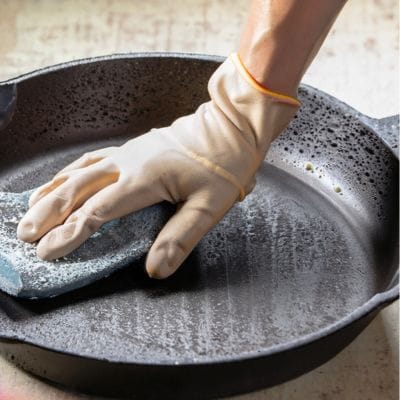
Use warm water and a little bit of mild dish soap to clean the skillet. You can use soap, but not too much and not every time. Use a non-metal brush or a soft scrubber to get rid of any sticky residue that is easy to see.
Make sure it’s completely dry
Cast iron doesn’t like moisture. After washing, dry the pan right away with a towel. Then, for a few minutes, put it on the stove over low heat to let the rest of the water evaporate.
Get rid of any sticky residue that is already there
If your skillet still feels sticky, you might need to scrub it a little harder (a paste of coarse salt and a little oil works great), or you could even bake it at 450°F for 10 to 15 minutes to help get rid of extra residue.
Re-Season the Right Way
- Use a very thin layer of oil with a high smoke point, like canola, grapeseed, or flaxseed oil, to cover the inside, outside, and handle. You want it to look barely shiny, not greasy, so less is more here.
- Use a paper towel to get rid of any extra oil. It should look like the surface is almost dry.
- Put the pan upside down, on the middle rack of an oven that isn’t hot. Put a piece of foil under it to catch the drips.
- For one hour bake at 400°F. Take the pan out of the oven and let it cool for at least an hour.
- If you want a finish that will last, season it 2–3 times.
Read More: Can You Use Pine-Sol on Granite Counters
How to Keep Your Cast Iron Non-Stick (and Not Sticky)
- Use it to cook a lot: The seasoning gets better the more you use your pan. Every time you use it, it adds another tiny layer of seasoning.
- Avoid soaking: Don’t let cast iron soak in water or dry out in the air.
- Clean while warm: It’s easier to get rid of food bits when you clean the pan while it’s still warm.
- Only use gentle tools: Soft sponges, nylon brushes, and chainmail scrubbers are all good things to have.
- Keep dry: If you stack pans, put a paper towel between them. Always make sure the pan is completely dry before putting it away.
Read More: Soapstone Countertops
Frequently Asked Questions
Is it okay to use soap on cast iron?
Yes, a little mild soap is fine, especially if you’re trying to get rid of sticky stuff. Just rinse well and let it dry completely.
How often should I add more seasoning to my pan?
There is no set rule; it depends on how often you use it and what you cook. It’s time to re-season if food starts to stick or the surface looks dull.
What kind of oil is best for seasoning?
Canola, grapeseed, and flaxseed oils are all good choices because they don’t have a strong flavour and have a high smoke point. Animal fats and oils with a low smoke point aren’t good for the oven process.
Is it dangerous to have sticky cast iron?
Not very often, unless you see rust or chipped enamel, it’s mostly a performance issue, not a health issue.
Is it okay to use cast iron on a stove with a glass top?
Yes, but be careful! Cast iron is heavy and can break or scratch glass. Always lift the pan, not slide it.